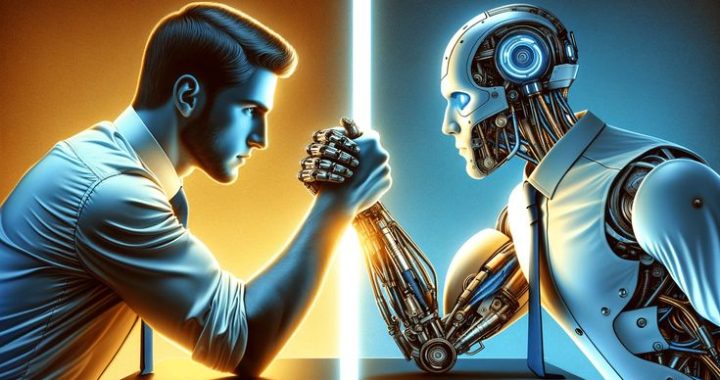
Digital marketing has changed a lot over the past few years. Today, Artificial Intelligence (AI) is helping businesses create content, analyze data, automate tasks, and improve customer experience. At the same time, human creativity is still the heart of successful marketing because people connect with emotions, stories, and original ideas.
Many people now ask an important question: **Who wins in digital marketing—AI or human creativity?** The answer is not as simple as choosing one over the other. Both have their own strengths, and the best marketing campaigns often use a combination of both.
In this blog, we will understand the role of AI and human creativity in digital marketing and see how they work together to achieve better results.
What is AI in Digital Marketing?
Computer programs that are capable of carrying out tasks that typically requirreferred to as artificial intelligence. AI can collect and analyze huge amounts of data, identify patterns, make predictions, and even generate content.e human intelligence are
Today, marketers use AI for many tasks, such as:
- Writing blog drafts and social media captions
- Keyword research for SEO
- Creating email campaigns
- Running chatbots for customer support
- Analyzing customer behavior
- Personalizing advertisements
- Creating images and videos
AI saves time and helps businesses work faster than ever before.
What is Human Creativity?
Human creativity is the ability to think differently, imagine new ideas, and create meaningful content that connects with people emotionally.
Creative marketers understand customer feelings, cultural trends, humor, storytelling, and brand personality. They can develop unique campaigns that people remember for a long time.
Unlike AI, humans use personal experiences, emotions, and imagination to create something truly original.
Strengths of AI in Digital Marketing
AI has become one of the most useful tools for marketers because it offers many advantages.
1. Saves Time
AI can complete tasks within minutes that may take hours for a person. It can generate blog outlines, write first drafts, create social media captions, and analyze reports quickly.
2. Works with Large Amounts of Data
Thousands of client encounters can be analyzed by AI to produce insightful results. It aids companies in comprehending consumer behavior and enhancing their marketing tactics.
3. Improves Personalization
Modern customers expect personalized experiences. AI can recommend products, send customized emails, and display relevant advertisements based on user interests.
4. Available 24/7
AI-powered chatbots can answer customer questions at any time of the day without needing a human representative.
5. Better Marketing Decisions
AI analyzes performance data and suggests improvements, helping businesses make smarter marketing decisions.
Strengths of Human Creativity
Even though AI is powerful, human creativity offers qualities that machines cannot fully replace.
1. Emotional Connection
People buy products because of emotions as much as logic. Human marketers are skilled at crafting narratives that uplift, amuse, and foster trust.
2. Original Ideas
AI creates content based on existing information, while humans can think of completely new concepts and unique campaign ideas.
3. Brand Personality
Every well-known company has a distinct voice and aesthetic. Human creativity helps maintain a consistent personality that customers recognize and remember.
4. Problem Solving
Unexpected situations often require creative thinking. Humans can adapt quickly and find innovative solutions that AI may not suggest.
5. Understanding Culture
Marketing messages should match local culture, trends, and customer emotions. Human marketers understand these details better than AI.
Where AI Falls Short
AI still has certain limitations even though it is getting smarter.
- It may produce repetitive content.
- It cannot truly understand human emotions.
- It sometimes gives incorrect or outdated information.
- It lacks personal experiences.
- It cannot fully replace creative thinking and imagination.
Because of these limitations, AI-generated content should always be reviewed by humans before publishing.
Where Humans Face Challenges
Human marketers are creative, but they also have some limitations.
- It can take a long time to create content.
- Analyzing large amounts of data manually is difficult.
- Managing multiple campaigns at once can be stressful.
- Repetitive tasks reduce productivity.
This is where AI becomes a valuable assistant.
AI and Human Creativity Work Better Together
Instead of competing, AI and humans create the best results when they work together.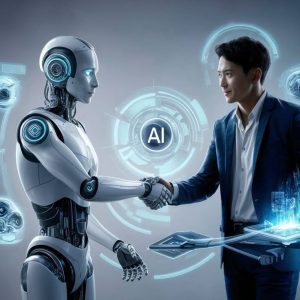
For example:
- AI performs keyword research, while humans write engaging blogs.
- AI generates design ideas, while designers improve them creatively.
- AI analyzes campaign performance, while marketers decide the strategy.
- Humans provide a personal touch to email drafts created by AI.
- AI automates repetitive work, allowing marketers to focus on innovation.
This combination saves time while maintaining quality and originality.
Real-Life Example
Consider a clothing company introducing a new category of uniforms.
AI can:
- Research trending keywords
- Analyze customer preferences
- Suggest the best posting times
- Generate product descriptions
- Recommend target audiences
Human marketers can:
- Develop the campaign theme
- Create emotional storytelling
- Design eye-catching visuals
- Produce engaging videos
- Build relationships with customers
Together, they create a campaign that is both data-driven and emotionally appealing.
Which One Wins?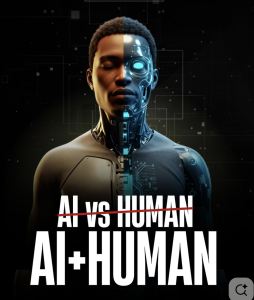
If we compare speed, automation, and data analysis, AI is the clear winner.
If we compare originality, storytelling, emotional connection, and innovation, human creativity wins.
However, digital marketing today is no longer about choosing one over the other. Businesses that rely only on AI may create content that feels robotic, while businesses that ignore AI may lose valuable time and insights.
The real success comes from combining AI’s efficiency with human creativity.
Conclusion
AI has transformed digital marketing by making tasks faster, smarter, and more efficient. It helps businesses analyze data, automate work, personalize customer experiences, and improve marketing performance. However, creativity, emotions, storytelling, and original ideas still come from humans.
Rather than replacing marketers, AI is becoming a powerful partner that supports their work. The most successful digital marketing strategies use AI for speed and automation while relying on human creativity to build trust and meaningful connections with customers.
In the end, there is no single winner in the debate between AI and human creativity. The real winner is the business that knows how to use both together. By combining technology with imagination, brands can create marketing campaigns that are efficient, engaging, and memorable, helping them grow in the competitive digital world.