
If you want to grow your business online quickly, Pay-Per-Click (PPC) advertising is one of the best marketing methods to consider. Unlike Search Engine Optimization (SEO), which takes time to show results, PPC can bring visitors to your website almost immediately. Whether you own a small business, an online store, or a local service company, PPC advertising can help you reach people who are already looking for your products or services.
For beginners, PPC may seem confusing because of terms like keywords, bids, Quality Score, and conversions. However, once you understand the basics, it becomes much easier to create successful advertising campaigns. In this guide, you will learn what PPC advertising is, how it works, its benefits, and the best practices for getting started.
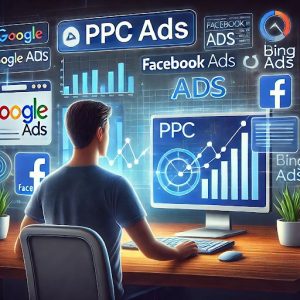 Pay-Per-Click, commonly known as PPC, is a type of online advertising where businesses pay only when someone clicks on their advertisement. Instead of paying to display the ad, you only pay when a user visits your website by clicking on it. This makes PPC a cost-effective marketing strategy because your budget is spent on people who show interest in your business.
One of the most popular PPC platforms is Google Ads. When someone searches for a product or service on Google, sponsored ads often appear at the top of the search results. These are PPC advertisements. Businesses bid on specific keywords related to their products or services, and Google decides which ads appear based on several factors, including the bid amount and the quality of the ad.
The process of PPC advertising is simple. First, you choose keywords that your potential customers are likely to search for. Afterwards, you build a visually appealing advertisement with an attention-grabbing headline and description. You then determine how much you are willing to spend for each click and establish a daily or monthly budget. Your advertisement might show up in the search results when people use certain terms. If they click on it, they are taken to your website or landing page, and you pay the cost of that click.
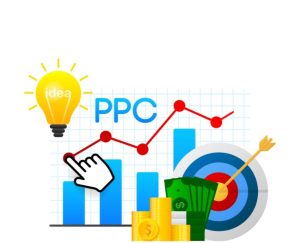 Speed is one of PPC advertising’s main benefits. While SEO may take several months to improve your website’s ranking, PPC campaigns can start driving traffic almost immediately after they are approved. This makes PPC an excellent option for new businesses, product launches, seasonal promotions, or special offers that need quick visibility.
Another major benefit is that PPC allows you to target the right audience. You can choose who sees your ads based on location, language, age, device, interests, and even the time of day. This precise targeting helps reduce wasted advertising spend and increases the chances of reaching customers who are most likely to buy from you.
PPC also gives you complete control over your budget. Whether you have a small budget or a large marketing investment, you can decide how much you want to spend each day. You can pause, increase, or reduce your campaigns whenever needed. PPC is appropriate for companies of all sizes because to its adaptability.
One of the reasons many businesses love PPC is that everything can be measured. You can track how many people saw your ad, how many clicked on it, how much each click cost, and how many visitors became customers. These insights help you understand what is working and what needs improvement, making it easier to increase your return on investment over time.
Choosing the right keywords is one of the most important parts of a successful PPC campaign. Instead of targeting broad terms, beginners should focus on keywords that clearly describe their products or services. Long-tail keywords are often a smart choice because they usually have less competition and attract users with stronger buying intent. For example, instead of targeting “shoes,” a business could target “comfortable running shoes for beginners.”
Writing an effective advertisement is equally important. Your ad should clearly explain what you offer and why customers should choose your business. A strong headline, a clear description, and a call-to-action such as “Shop Now,” “Get a Free Quote,” or “Book Today” can encourage users to click on your ad.
 Your landing page also plays a major role in PPC success. After clicking the advertisement, visitors should arrive on a page that matches the promise made in the ad. The landing page should load quickly, provide useful information, and make it easy for visitors to complete an action, such as making a purchase, filling out a contact form, or requesting a consultation.
Many beginners make common mistakes when starting with PPC advertising. Some choose very broad keywords, while others ignore negative keywords that prevent irrelevant searches from triggering their ads. Another common mistake is sending visitors to the homepage instead of a dedicated landing page. Businesses also sometimes forget to monitor their campaigns regularly, which can lead to wasted spending and lower performance.
To improve results, PPC campaigns should be reviewed frequently. Testing different headlines, adjusting bids, improving landing pages, and adding new keywords can help increase clicks and conversions. Small improvements made over time often lead to much better campaign performance.
When paired with other digital marketing techniques, PPC advertising performs even better. While PPC delivers immediate traffic, SEO helps build long-term organic visibility. Content marketing provides valuable information to potential customers, while social media marketing increases brand awareness. Together, these strategies create a stronger online presence and improve overall marketing results.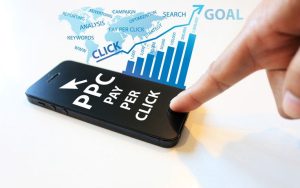
In conclusion, Pay-Per-Click advertising is an excellent choice for businesses that want fast, measurable, and targeted online marketing results. Although it may seem complicated at first, understanding the basics of keywords, ad creation, budgeting, and landing pages makes it much easier to run successful campaigns. With careful planning, continuous optimization, and regular performance tracking, beginners can use PPC to attract more visitors, generate quality leads, and increase sales. As your experience grows, PPC can become one of the most valuable tools in your digital marketing strategy, helping your business compete effectively in today’s online marketplace.