Social Media That Actually Sells.
What is Social Media ?
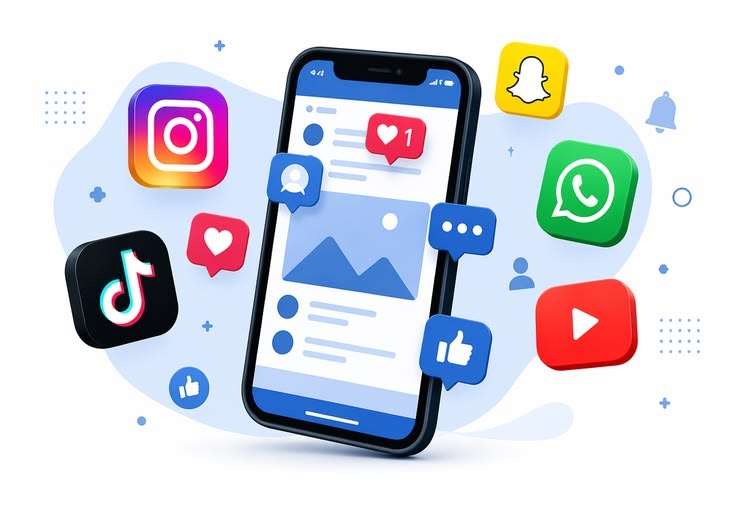
Social media refers to interactive, internet-based platforms and applications that allow users to create, share, and exchange information, ideas, and multimedia content within virtual networks. Unlike traditional broadcast media, which operates in a one-way direction, social media thrives on two-way communication, real-time feedback, and community engagement. Platforms like Instagram, X, LinkedIn, Facebook and YouTube enable individuals, creators, and businesses to connect across geographic boundaries, build digital relationships, and influence public culture. At its core, social media transforms passive consumers into active participants, shaping how modern society communicates, discovers news, conducts commerce, and expresses identity.
What is Social Media Marketing ?
Social media marketing is the practice of using platforms like Instagram, LinkedIn, and YouTube to connect with your audience, build brand identity, and drive meaningful business growth. Rather than just broadcasting sales pitches, effective social marketing focuses on storytelling, consistent engagement, and delivering genuine value through relatable content. By combining organic community interactions with targeted paid advertising, brands can reach hyper-specific demographics, gather real-time consumer feedback, and adapt their messaging on the fly. Ultimately, a successful strategy transforms casual passive scrollers into active brand advocates by fostering trust, spark conversations, and establishing an authentic digital presence.
The Modern Digital Arena: Where Attention Turns Into Currency


Tiktok
"Instagram" serves as the visual storefront of the digital world, where aspirational aesthetics, snappy Reels, and interactive Stories convert passive scrollers into passionate brand advocates. It thrives on high production value, polished lifestyle branding, and direct influencer partnerships that make products feel desirable in daily life.
"LinkedIn" functions as the undisputed high-rise boardroom, prioritizing professional authority, industry data, and thoughtful founder narratives over flashy entertainment. Brands that succeed here strip away the consumer fluff, delivering actionable business intelligence, corporate thought leadership, and talent-attracting company culture.
"TikTok" rewrites the rules of discovery with a raw, fast-moving algorithm that favors unvarnished authenticity over glossy edits. It is a trend incubator where hyper-specific subcultures live, allowing small creators and massive enterprises alike to build viral cultural relevance overnight through native humor and direct, human connection.



YouTube
X
"YouTube" stands as the ultimate long-term compounding asset, functioning equally as an entertainment hub and the world’s second-largest search engine. By hosting in-depth tutorials, product teardowns, and episodic storytelling alongside punchy YouTube Shorts, it builds profound audience trust that retains high conversion value for years.
"X (formerly Twitter)" remains the digital water cooler, operating in real-time conversational bursts where speed, wit, and immediate commentary rule. Brands leverage it not for heavy visual storytelling, but for proactive customer support, breaking news announcements, and culture-jacking moments that keep them at the center of ongoing public discourse.
"Pinterest" quietly commands high-intent buying journeys, serving as a personal digital vision board for users actively planning home renovations, fashion updates, recipes, and major milestones. Its shelf-life outlasts nearly every other feed, turning simple product pins into consistent evergreen traffic drivers and direct e-commerce conversions.
Organic SMM Vs Paid SMM


Organic social media marketing focuses on building a dedicated audience naturally over time through unpaid posts, authentic interactions, and community engagement. You create value by sharing educational content, entertaining stories, and regular updates that resonate with existing followers and encourage word-of-mouth shares. The primary strengths of organic SMM are credibility, trust, and cost efficiency in media spend. When users interact with genuine content, they build long-term brand loyalty. However, organic reach is heavily limited by platform algorithms, meaning only a fraction of your followers will see any given post, and scaling visibility takes substantial patience and consistent effort.
Paid social media marketing, on the other hand, relies on sponsored posts, boosted content, and targeted ad campaigns to purchase immediate visibility. Rather than waiting for the algorithm to surface your content, you pay platforms like Meta, LinkedIn, or TikTok to place your message directly in front of highly specific audiences defined by demographics, interests, behaviors, and locations. This approach excels at rapid lead generation, product launches, precise retargeting, and measurable conversions. The main trade-off is sustainability: the moment ad budgets stop, traffic and visibility evaporate immediately, and high acquisition costs can reduce profitability if campaigns are not tightly optimized.
FAQ's Social Media Marketing
An online store or platform where users purchase bulk social media services (followers, likes, views, comments). While widely available, using panels carries substantial risks, including platform shadowbans, account suspensions, and artificially distorted engagement analytics.
Organic SMM relies on unpaid content (posts, stories, reels) to engage your existing followers and grow gradually via algorithm reach. Paid social uses targeted ad spend to reach specific demographics and accelerate lead generation or conversions.
We manage all major platforms, including Instagram, LinkedIn, Facebook, X, YouTube, and Pinterest. We recommend the optimal channel mix based on where your target audience is most active.
Our end-to-end management covers strategy formulation, content ideation and copywriting, graphic design and short-form video editing, scheduling, hashtag/keyword optimization, proactive community management, and monthly performance reporting.
-
Yes. We handle end-to-end paid campaign management (Meta Ads, LinkedIn Ads, Google Ads), including audience targeting, creative testing, budget allocation, pixel tracking, and conversion rate optimization (CRO).