How to Write Google Ads That Get More Clicks

Introduction

One of the quickest ways to increase website traffic is to run Google Ads. However, creating an ad is only the first step. The real challenge is getting people to click on it. Every day, users see multiple ads for the same search. People are likely to tap on a competitor’s advertising if yours fails to grab their attention or provide a clear explanation of why they should choose your company.

Besides contributing to increasing the number of potential customers who visit your website, a high click-through rate (CTR) can raise your Google Ads Quality Score. This may help lower your advertising costs while improving your ad position. The good news is that writing effective Google Ads is not difficult when you understand what your audience wants. In this blog, you will learn simple techniques to write Google Ads that attract more clicks and deliver better results.

Understand What Your Customers Are Searching For

The best Google Ads start with understanding the customer’s intent. Before writing your ad, think about why someone is searching for a particular keyword. Are they preparing to buy, searching for information, or comparing products?

For instance, someone looking for the “best digital marketing agency” is probably evaluating several businesses. Someone searching for “hire Google Ads expert today” is probably ready to take action. Your ad should match the user’s intent and provide the answer they are looking for. When your message matches the search query, users are much more likely to click on your ad.

Write a Strong and Attention-Grabbing Headline

The headline is the first thing people notice in your Google Ad. It should immediately tell users that your ad is relevant to their search. Including your main keyword in the headline helps users feel confident that your ad matches what they need.

A engaging title must also highlight an obvious advantage. Instead of writing a generic headline like “Marketing Services,” write something more specific such as “Grow Your Business with Expert Google Ads.” This tells users exactly what they can expect and encourages them to learn more.

Clear and direct headlines usually perform better than complicated or overly creative ones.

Focus on Benefits Instead of Features

Businesses frequently make the mistake of concentrating just on their products. Customers care more about how those services will help them.

Explain the significance by explaining that your campaigns are intended to produce more qualified leads and boost revenues rather than claiming that your agency provides Google Ads management. People are interested in solving their problems, saving money, growing their business, or achieving better results.

When your ad clearly explains the value customers will receive, it becomes much more attractive.

Include a Clear Call to Action

Users should feel encouraged to move forward by every Google Ad. A call to action tells people exactly what they should do after reading your ad.

Simple phrases such as “Get Your Free Quote,” “Book a Free Consultation,” “Start Today,” or “Contact Our Experts” create a sense of direction and make it easier for users to decide.

Without a strong call to action, users may understand your service but still choose not to click because they are unsure what to do next.

Build Trust with Your Audience

Advertisements from companies that people trust are more likely to be clicked. You can build trust by mentioning your experience, customer satisfaction, or unique advantages.

For example, if you have managed hundreds of successful campaigns or have years of experience, mention that in your ad. If you offer free consultations, fast support, or customized strategies, include those details as well.

Even small trust signals can make your ad stand out from competitors offering similar services.

Use Emotional and Action-Oriented Language

Good advertising often connects with emotions. People click on ads that promise positive outcomes such as saving money, growing their business, increasing sales, or reducing stress.

Words like “boost,” “grow,” “improve,” “discover,” and “achieve” generate enthusiasm and motivate action. Simultaneously, use straightforward, organic language. Avoid using exaggerated claims that sound unrealistic because they can reduce trust.

The goal is to make users feel confident that clicking your ad will help solve their problem.

Take Advantage of Google Ads Extensions

Writing great ad copy is important, but using Google Ads extensions can make your ads even stronger. Extensions allow you to display additional information such as phone numbers, website links, business locations, special offers, and customer reviews.

These extra details make your ad larger and more informative, increasing its visibility on the search results page. Users often prefer ads that provide more useful information before they even visit the website.

Test Different Versions of Your Ads

Even experienced advertisers do not know which ad will perform best without testing. Even if the difference seems slight, one title could get a lot more clicks than another.

Make several variations of your Google Ads with distinct calls to action, headlines, and descriptions. Run them at the same time and monitor their performance. Google Ads provides detailed reports that help you identify which ads receive the highest click-through rates.

You may achieve better results from your advertising budget and gradually improve your ads with regular testing.

Keep Your Message Simple

Many businesses try to include too much information in a single ad. This often confuses users instead of attracting them.

A successful Google Ad is clear, direct, and easy to understand. Focus on one main message and explain it in simple language. Users usually spend only a few seconds reading search results, so every word matters.

Long and complex descriptions are far less effective than succinct, straightforward statements.

Conclusion

Writing Google Ads that get more clicks is a combination of understanding your audience, creating strong headlines, highlighting customer benefits, and using clear calls to action. The most successful ads speak directly to the user’s needs and make it obvious why your business is the best choice.

Remember that writing effective Google Ads is an ongoing process. Continue testing different headlines, improving your messaging, and learning from campaign data. Small improvements can lead to higher click-through rates, better Quality Scores, lower advertising costs, and more conversions.

If you want your business to get better results from Google Ads, focus on creating ads that are relevant, trustworthy, and easy to understand. Well-written Google Ads not only attract more clicks but also help turn those clicks into loyal customers and long-term business growth.
How Local Businesses Can Generate More Leads with Google Ads

Introduction

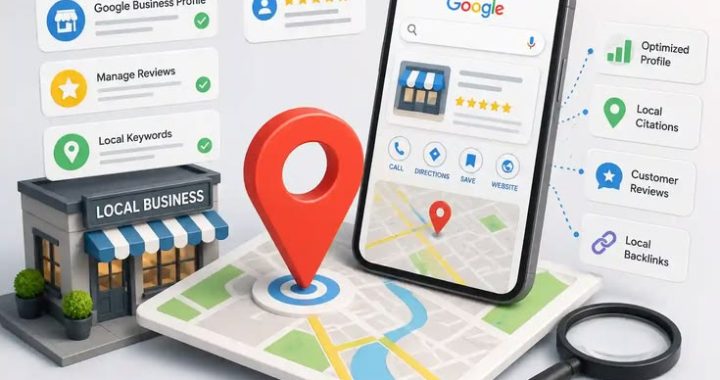
Every local business wants more customers. Whether you own a restaurant, salon, dental clinic, gym, repair service, or retail store, finding new customers is one of the biggest challenges. While traditional advertising methods like newspapers, flyers, and banners still have some value, most people today search online before making a purchase or visiting a business.

This is where Google Ads becomes a powerful marketing tool. Google Ads helps local businesses reach people who are actively searching for products or services nearby. Instead of waiting for customers to find you, your business appears at the top of Google search results when someone is ready to buy.

In this blog, you will learn how local businesses can generate more leads with Google Ads and why it is one of the best investments for business growth.Continue reading

How AI Is Changing Google Ads in 2026

Introduction

AI is changing the way businesses run Google Ads in 2026. From creating ad copy to finding the right audience, artificial intelligence is making advertising faster, smarter, and more effective. Businesses no longer have to spend hours managing campaigns manually because AI can now automate many important tasks. Whether you are a small business owner, a startup, or a large company, understanding how AI works with Google Ads can help you get better results while saving time and money.Continue reading

A Beginner’s Guide to Pay-Per-Click (PPC) Advertising

If you want to grow your business online quickly, Pay-Per-Click (PPC) advertising is one of the best marketing methods to consider. Unlike Search Engine Optimization (SEO), which takes time to show results, PPC can bring visitors to your website almost immediately. Whether you own a small business, an online store, or a local service company, PPC advertising can help you reach people who are already looking for your products or services.

For beginners, PPC may seem confusing because of terms like keywords, bids, Quality Score, and conversions. However, once you understand the basics, it becomes much easier to create successful advertising campaigns. In this guide, you will learn what PPC advertising is, how it works, its benefits, and the best practices for getting started.Continue reading

Why Your Google Ads Aren’t Bringing Sales

One of the quickest ways to increase website traffic is through Google Ads. Millions of people use Google every day to look for goods and services they require. If your business appears at the top of the search results, you have a great chance of getting more visitors and customers.

However, many business owners spend money on Google Ads but still don’t get enough sales. They receive clicks, website visits, and impressions, but very few people actually buy their products or contact them. This can be frustrating, especially when you are investing your hard-earned money.

Fortunately, Google Ads itself is typically not the issue. In most cases, a few common mistakes are preventing your campaigns from delivering the results you expect. Once you identify these issues and fix them, your ads can become much more profitable.Continue reading

How to Use AI for Better SEO and Higher Google Rankings

Search Engine Optimization (SEO) is one of the best ways to bring more visitors to your website. However, SEO takes time, research, and continuous updates. The good news is that SEO is now simpler than ever thanks to artificial intelligence (AI). Today, businesses can use AI to find the right keywords, create quality content, improve website performance, and understand what their audience is searching for.

AI can be a useful tool if you want your website to rank higher on Google without investing hours in manual labor. In this blog, we will explain how AI can improve your SEO strategy in simple and easy-to-understand language.

What is AI in SEO?

AI in SEO means using artificial intelligence tools to help improve your website’s visibility on search engines like Google. AI tools analyze large amounts of data within seconds and provide useful suggestions that help improve your website.

Instead of doing everything by hand, AI can help with the following:Continue reading

AI in Social Media Marketing: Create Better Content in Less Time

Introduction

For companies of all sizes, social media has established itself as one of the most key marketing platforms. Whether you own a small business, run an online store, or manage a large company, platforms like Facebook, Instagram, LinkedIn, X (Twitter), and TikTok help you connect with customers every day. However, consistently producing original and captivating material can be difficult and time-consuming.

Artificial Intelligence (AI) is having a significant impact on this. AI tools help marketers create content faster, improve creativity, and save valuable time without compromising quality. From writing captions to designing images and scheduling posts, AI can simplify almost every part of social media marketing.

We’ll look at how AI is transforming social media marketing in this blog and how companies can utilize it to produce better content faster.

What is AI in Social Media Marketing?

Continue reading

AI vs Human Creativity in Digital Marketing: Which One Wins?

Digital marketing has changed a lot over the past few years. Today, Artificial Intelligence (AI) is helping businesses create content, analyze data, automate tasks, and improve customer experience. At the same time, human creativity is still the heart of successful marketing because people connect with emotions, stories, and original ideas.

Many people now ask an important question: **Who wins in digital marketing—AI or human creativity?** The answer is not as simple as choosing one over the other. Both have their own strengths, and the best marketing campaigns often use a combination of both.

In this blog, we will understand the role of AI and human creativity in digital marketing and see how they work together to achieve better results.Continue reading

10 Powerful AI Tools Every Digital Marketer Should Use in 2026

Digital marketing now heavily depends on artificial intelligence (AI). It helps businesses save time, improve productivity, create better content, and make smarter marketing decisions. Whether you are a freelancer, small business owner, or digital marketing agency like “Digital Sprint”, using the right AI tools can help you stay ahead of your competitors.

Here are “10 powerful AI tools” that every digital marketer should know.Continue reading

How AI Is Transforming Digital Marketing in 2026

Artificial Intelligence (AI) is no longer a technology of the future—it has become a powerful part of digital marketing in 2026. Businesses of all sizes are using AI to save time, understand customers better, create high-quality content, and improve marketing results. From search engine optimization (SEO) to social media management, email marketing, and customer support, AI is helping marketers work smarter instead of harder.

Whether you run a small business, an online store, or a large company, understanding how AI is changing digital marketing can help you stay ahead of your competitors. In this blog, we will explore how AI is transforming different areas of digital marketing in simple and easy-to-understand language.

What is AI in Digital Marketing?

Computer programs that are capable of carrying out tasks that typically require human intelligence are referred to as artificial intelligence. These tasks include learning from data, understanding language, recognizing patterns, making predictions, and solving problems.Continue reading